What Still Connects Us: Revisiting Living Traditions and the Communities That Sustain Them
Apr 07, 2026 Dr. SeongYong Park
In today’s hyper-connected world, communication flows faster than ever across borders and cultures. Yet paradoxically, understanding between people often feels more distant. Conflicts persist, communities weaken, and individuals increasingly find themselves asking fundamental questions: Where do we come from? And what still connects us?
These questions offer a new lens through which to view the concept of heritage families.
Traditionally, heritage families have been seen as remnants of history—lineages preserved in records or traditions slowly fading with time. However, a more dynamic interpretation is emerging. Rather than being confined to the past, heritage families can be understood as living cultural entities—communities that actively sustain and transmit values, practices, and identities across generations.
This perspective aligns with the principles of the 2003 UNESCO Convention for the Safeguarding of Intangible Cultural Heritage, which defines cultural heritage as “living heritage.” According to this framework, heritage is not measured by age alone, but by three essential criteria: whether it is recognized by a community, passed down through generations, and still practiced in the present.
From this standpoint, heritage families represent a form of intangible cultural heritage—fluid, evolving, and deeply rooted in community life.
A key feature of such families is the role of rituals. Practices like ancestral rites are not merely ceremonial acts; they function as social frameworks that reinforce belonging, responsibility, and continuity. In Korea, for instance, clan-based ancestral rituals exemplify this, falling under UNESCO’s category of “social practices, rituals, and festive events.” Yet similar traditions exist worldwide, reflecting a shared human need to maintain connection through collective memory and practice.
Importantly, the true custodians of intangible heritage are not institutions, but communities themselves. Heritage families embody this idea by preserving meaning through shared understanding, adapting traditions over time, and continuously recreating culture in response to changing realities.
In modern society, where identity often feels uncertain and intergenerational dialogue is weakening, such living traditions gain renewed relevance. While heritage families may not provide direct answers, they encourage deeper reflection: What are we continuing? Where do we belong?
In response to these questions, Culture Masters has launched a new editorial series titled “Heritage Families.” Rather than offering a fixed definition, the series aims to explore diverse global examples of how cultural meaning is sustained across generations. It begins with the Medici family—renowned for its role in the Renaissance—and will expand to include communities from Asia, Africa, the Middle East, and beyond.
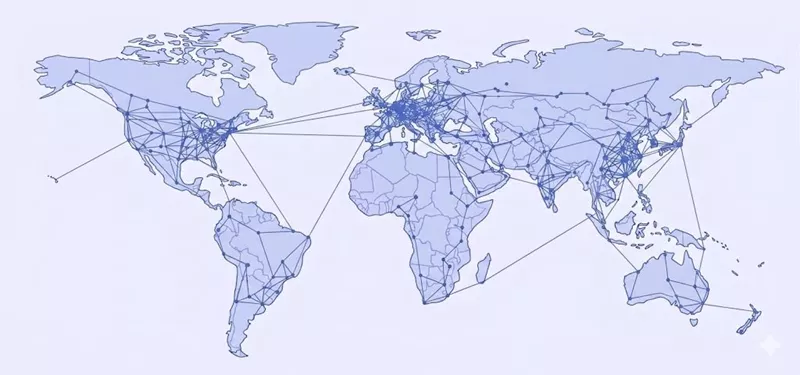
The initiative also envisions a broader project, the Global Heritage 100, which seeks to document heritage families and intangible cultural communities worldwide. Built through collaboration with an International Advisory Board of cultural experts from 15 countries, the project emphasises openness, dialogue, and shared understanding over rigid frameworks.
Ultimately, heritage families can be seen in different ways—either as echoes of the past or as living expressions of the present. Their true significance depends on how we choose to engage with them. What remains undeniable, however, is that the memories, values, and experiences they carry continue to endure.
And perhaps, in seeking to understand them, we may find new ways to understand one another.